BIM coordinator: role, missions, salary
The BIM coordinator guarantees model consistency and facilitates exchanges among project stakeholders to avoid errors and delays.

BIM centralizes all of a project's data in a digital model: it improves deliverable quality, reduces errors and enables better monitoring of structures over time. In this context, the BIM coordinator plays the role of conductor. Missions, skills, training, salary and career prospects: here is what the role involves.
What is a BIM coordinator?
The BIM coordinator is a construction professional specialized in operating digital models. They bridge BIM modelers, who produce the models, and the BIM manager, who is the guarantor of the overall strategy.
- They apply the convention and protocol defined upstream.
- They configure access rights on the collaborative platforms.
- They validate deliverables and oversee object library updates.
- They ensure smooth exchanges between disciplines, with no information loss or break in continuity.
Their mission: to guarantee that every model respects the rules defined upstream, integrates with the others, and faithfully reflects on-site progress.
When a model raises an issue, they don't just send it back: they analyze it, look for where the deviation came from and prevent its recurrence. They take part in meetings, formalize decisions and flag technical deviations, sometimes before they become visible in the model. It's often their rigor that allows the schedule to hold and limits rework.
A BIM coordinator's missions
The BIM coordinator works at every project stage, from design to operation. They check model quality, smooth out exchanges between disciplines, and ensure BIM methods are applied.
- Checking the quality of digital data: they verify the 3D models, validate the information entered and extract useful data (quantities, schedules, technical sheets, DOE as-built deliverables). In the event of an error, they identify the source and propose technical or organizational adjustments.
- Driving collaboration: they engage with architects, engineers, site managers, sometimes end clients, adapt their language and support teams in getting to grips with the tools, relying on collaborative platforms such as Kroqi.
- Running the BIM process day to day: they implement the BIM protocol, the deliverables schedule and access management on the common platform, plan the contributors' work and ensure deadlines are met.
- Coordinating the disciplines' models: they verify their compatibility and positioning (axes, levels, orientations) so they can integrate into a federated model, and resolve technical conflicts before they affect the worksite.
Skills and qualities required
The role combines a solid understanding of construction, command of the tools and strong human qualities.
- Understanding of constructionGrasping what the model represents and how each element fits onto an actual site, to bridge the digital and the field.
- Command of the softwareKnowing how to use and interpret Revit, ArchiCAD, Allplan, Navisworks or Solibri, and structuring data so others can use it.
- People skillsExplaining, reformulating and guiding without giving orders, defending a standard while remaining open to listening.
- Rigor and enduranceWhen models multiply and deadlines tighten, embodying the stability that keeps the project on track.
Training and career paths to become a BIM coordinator
Most BIM coordinators come from a Bac+3 to Bac+5 level program in construction.
- A professional bachelor's degree at Bac+3, particularly those focused on "digital modeling" in construction industry tracks.
- A Master's or engineering degree, with progressive specialization: modeling, project management, process coordination.
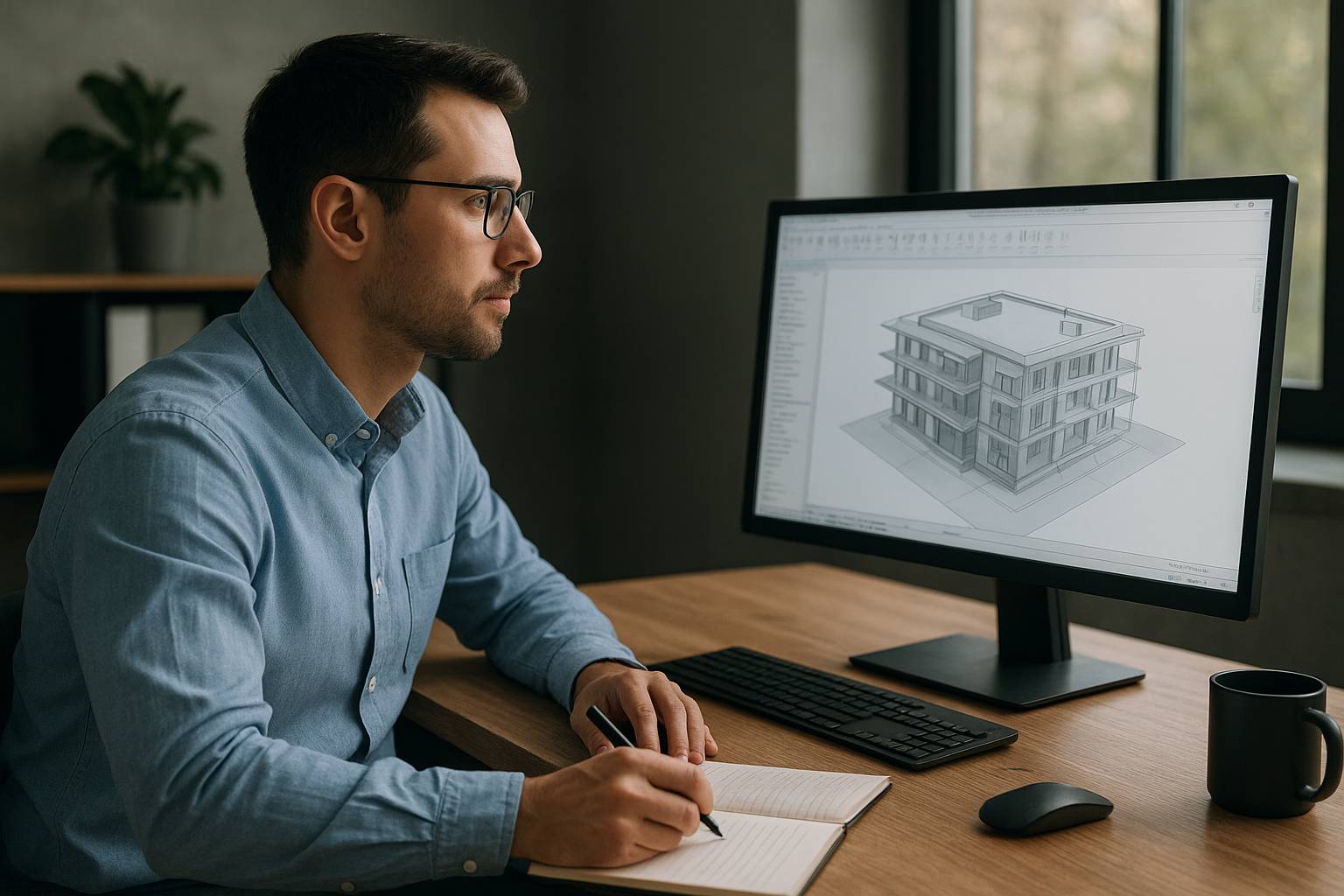
Schools and work-study
Several schools and universities have integrated BIM into their core curriculum or as a specialization, for instance ESTP, ESITC Caen, Ponts ParisTech, Reims, La Rochelle or Paris Cergy. These programs often rely on work-study formats: BIM is learned in projects, on the ground, in contact with the trades.
Further training
To go further, specialized master's programs exist for architects (such as the HMONP with a BIM option), engineers or project managers.
Discover
Discover the Kroqi platform.
Start your free trial or request a personalized demo.
Tools used by the BIM coordinator
The BIM coordinator relies on a set of tools to ensure consistency, quality and smooth exchanges around the digital model.
- 3D modeling software: Revit, ArchiCAD, Allplan and Tekla allow detailed models to be created, enriched with technical data and brought into compliance with BIM standards.
- Common Data Environment (CDE): the backbone of collaborative work, where they manage access rights, file versions and validation workflows. Kroqi, a CSTB affiliate, makes it possible to store, share and view BIM models online, even without costly software.
- Coordination and quality control: Navisworks, Solibri or Naviate serve to verify model compatibility, organize cross-discipline synthesis and validate spatial and technical consistency.
- CAD/drafting tools and specialized plugins: extensions for eco-design analyses, task automation or stronger clash detection.
- Planning and data management: Gantt charts and dashboards tied to model data connect the models to site reality (deadlines, quantities, approvals).
Salary and career prospects
According to Talent.com in 2025, the median annual salary in France is around €38,450 gross (i.e. ~€3,200 gross per month). A junior coordinator earns around €33,000 per year, an experienced profile reaches €45,000 to €47,000. Salaries can be higher in major metropolitan areas or in Île-de-France, and some companies offer add-ons (company car, profit-sharing).
Moving on to positions of responsibility
- BIM Manager: defining a project's or a firm's BIM strategy, leading teams and choosing the tools.
- Technical project manager or head of an engineering office: handling multiple operations and overseeing projects globally.
- Training or consulting: becoming a BIM training manager or a consultant supporting other companies.
- HMONP: for a profile from an architectural background, practicing as a project manager and leading an architectural project.
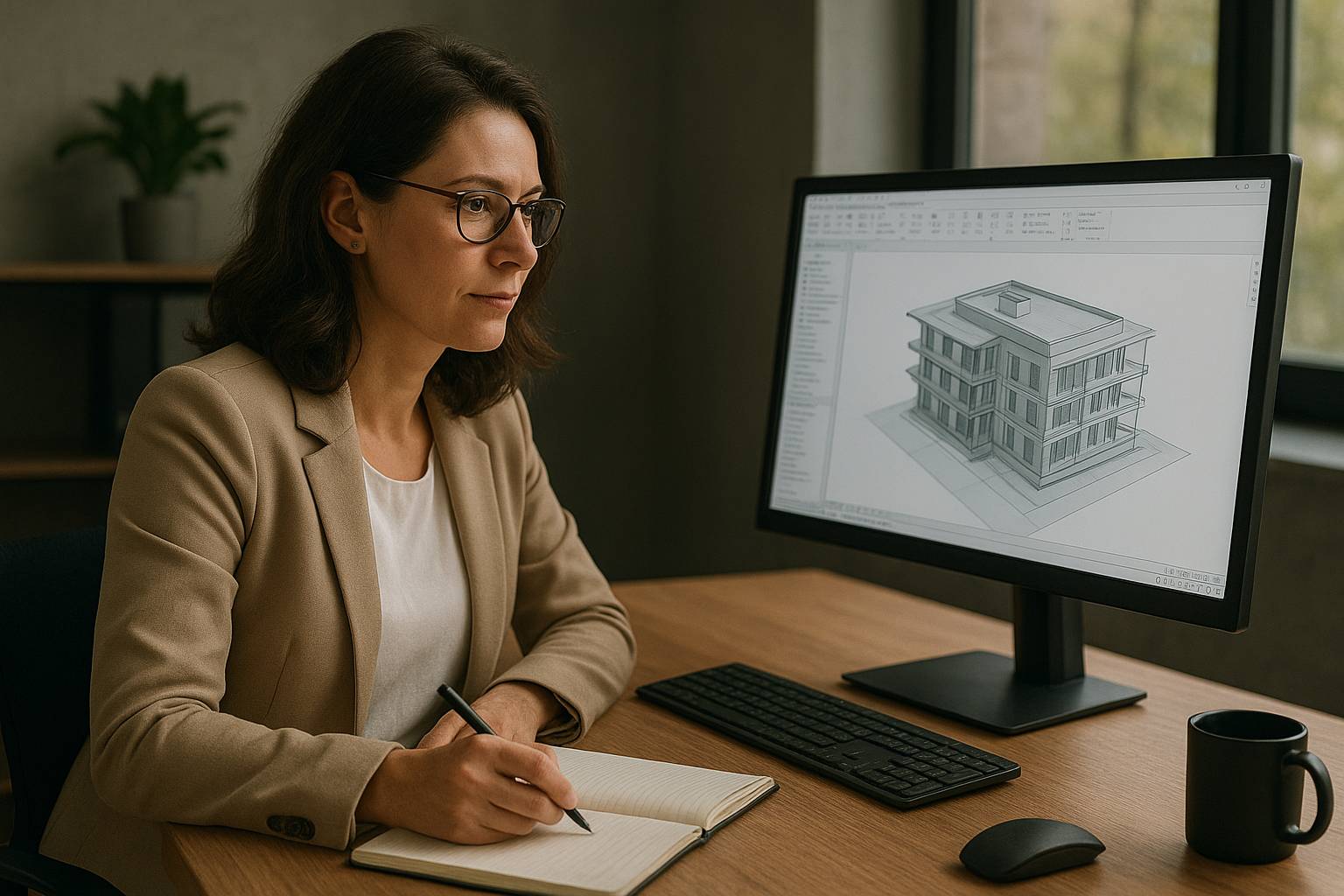
4D/5D BIM and augmented reality also create niches of expertise (advanced BIM, digital twin), with opportunities in construction, urban management and heritage.
Your questions about the BIM coordinator role
BIM Manager or BIM coordinator?
The coordinator operates on the ground, close to production teams: they oversee model integration, resolve conflicts and track deliverables. The BIM Manager defines the methodology, drafts the convention and ensures the company's digital objectives are met.
Is BIM reserved for large companies?
No. Tools like Kroqi make BIM accessible to SMEs, and more and more project owners require BIM monitoring, even on mid-sized operations.
Will the role evolve?
Yes, with 4D BIM (planning), 5D (cost), 6D (sustainability) or 7D (operations). The role expands toward more leadership, responsibility and expertise.
Do you need a construction background?
It's a real asset for understanding the site, the trades and the project owner. Profiles from architecture or digital backgrounds also succeed, provided they take on board the on-the-ground realities.
How does the professional certification assessment work?
A professional simulation or the presentation of a project, a technical interview with a jury and the presentation of a professional portfolio.
Is the certification recognized internationally?
The Building BIM Coordinator certification is recognized at the national level in France. Abroad, check the equivalences of each country.
How to strengthen your application?
By contextualizing each skill (coordinating a model, managing a collaborative project, supervising a training module) and presenting projects with clear deliverables (charter, convention, IFC formats). The professional certification, accredited by the Ministry of Labor (CCP), is a recognized asset.
A key role in BIM collaboration
Between modelers, the BIM Manager and site teams, the BIM coordinator guarantees consistent models and smooth exchanges.
A collaborative platform such as Kroqi centralizes exchanges and simplifies access to data for every project actor.


