BIM designer: role, missions and career prospects
An operational BIM role, the designer models structures, enriches the digital model with reliable data and contributes to the quality of BIM deliverables.
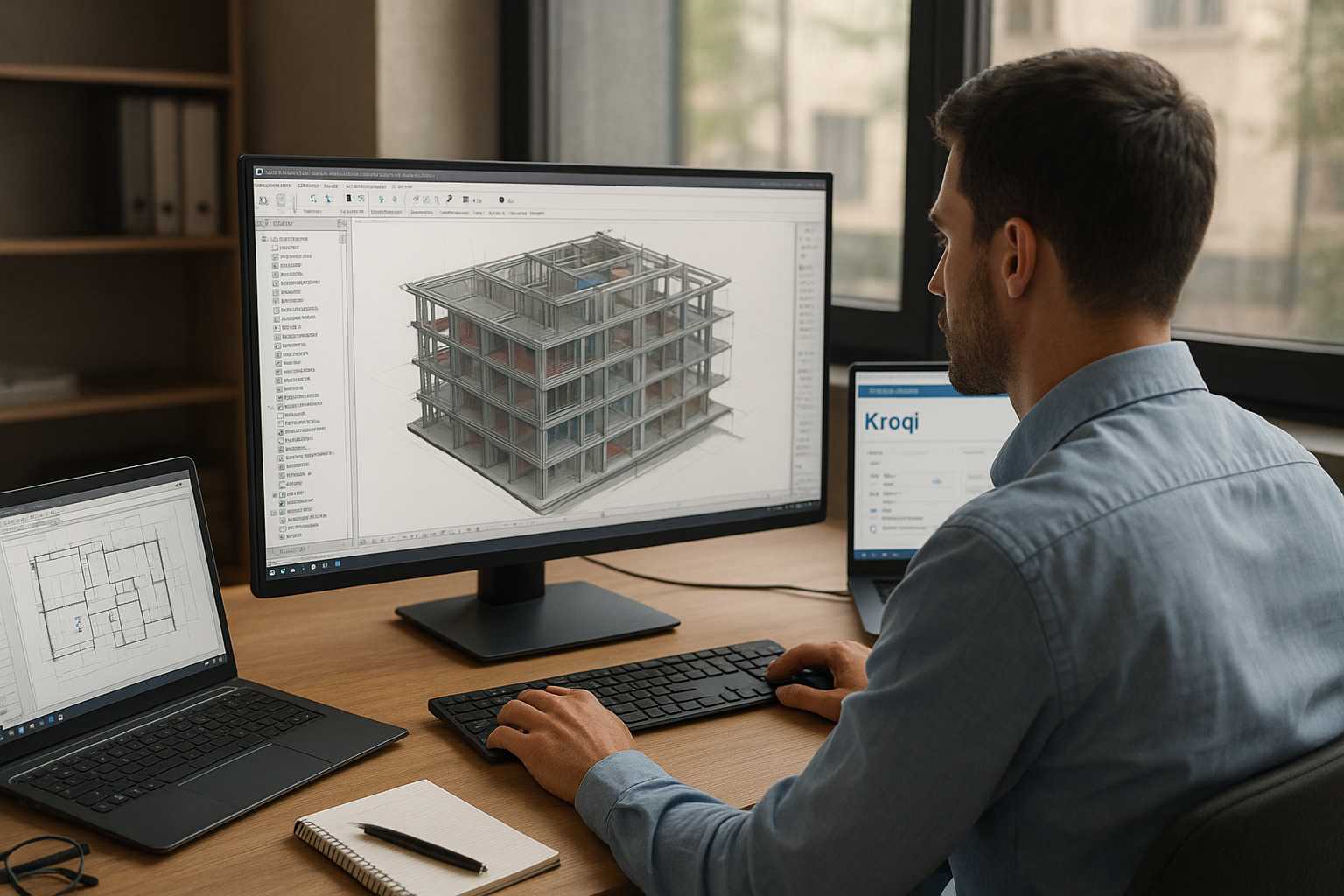
The spread of BIM processes in construction has created several roles. The BIM designer is responsible for creating the building's model: they turn architects' projects into 3D diagrams and images thanks to Building Information Modeling tools.
Definition and role of the BIM designer
Their missions go beyond modeling:
- They perform the calculations needed to identify plan defects and correct them.
- They take part in choosing scales, materials and construction methods.
- They propose construction solutions based on the study of technical constraints.
- They attend the technical site meetings and ensure project monitoring.
An essential link in the BIM process, the designer models the digital model of a construction project and updates it as work progresses on site. They work for an architectural firm, an engineering office, a construction company or the public sector.
BIM designer or BIM drafter: what's the difference?
Both positions are responsible for creating the 3D digital model. The difference lies in the level of responsibility.
- The BIM designerDevelops technical solutions, makes design decisions and manages various aspects of the project.
- The BIM drafterHas a more operational role and executes plans and models according to the designer's or architect's directives.
- The designer-drafterThe two activities are often combined, which limits information loss and the dispersal of responsibilities on a project.


Technical skills of the BIM designer
To accomplish their mission, the BIM designer needs solid technical skills and must master several tools.
- CAD/drafting toolsIn-depth knowledge of computer-aided design and drawing software for 3D modeling, sketches, diagrams and fabrication plans.
- BIM software and coordinationExpertise in BIM processes and the associated software for 3D coordination, clash detection and data exchange.
- Construction knowledgeSolid grounding in construction techniques, energy regulations and the building lifecycle.
- Office toolsExpert use of office suites for reports, dashboards and data analysis.
Discover
Discover the Kroqi platform.
Start your free trial or request a personalized demo.
Expected personal qualities
Beyond technical expertise, the role calls for several personal qualities:
- Communication and collaborationWorking in a team with architects, engineers and contractors, and training users on BIM tools.
- Rigor and organizationFollowing the procedures established upstream of the project, managing model versions methodically and paying close attention to detail.
- Problem solvingAnalyzing project constraints to come up with creative, pragmatic technical solutions, and continuously optimizing methods.
- Technology watchStaying curious about new technologies tied to BIM sector developments.
- AdaptabilityBeing flexible to meet the specific requirements of each project.
The BIM designer's tools
The designer relies on three families of tools:
- Modeling software: Building Information Modeling software is where a large part of their activity takes place.
- Coordination and collaboration tools: these platforms include a DMS (Document Management System) and file centralization and sharing solutions to facilitate exchanges.
- Visualization, rendering and office tools: visualization and rendering software, complemented by various office tools.
Kroqi centralizes all these features to help construction experts optimize their BIM processes and on-site collaboration.
Studies and certifications to become a BIM designer
- Bac+2/3 training such as a BTS Bâtiment or DUT Civil Engineering.
- The level 5 professional certification (BTS/DUT) of Building BIM Modeler: the royal road to head directly into this career after secondary school.

BIM specialization
The Bac+2/3 training is then supplemented with a BIM specialization.
Software certifications
Software certifications showcase your expertise to recruiters and keep your knowledge up to date.
Why choose the BIM designer profession?
Like other BIM professions, the designer role is attractive, provided you match the typical profile of the position.
- A varied roleDepending on the employer and the project, you develop different skills in a stimulating environment where technical expertise and creativity combine.
- A hybrid profileThe role particularly suits people who are technical (drawing, modeling), strong communicators and passionate about technology.
- A sought-after skillMastery of BIM processes enhances your profile with employers and helps you progress more quickly in your career.
- Attractive payCompensation in the sector is particularly attractive, even for a junior designer.
- Day-to-day pressureThe rigor required to avoid errors, deadlines and adaptations to site constraints can quickly become sources of stress.
Salary and career prospects
Based on job postings for this position, the average gross salary offered is €36,000/year, and 80% of postings are between €30,000 and €44,000. The role is also an excellent career booster:
- Progress within BIM: become a coordinator, manager or even BIM consultant.
- Retrain: move toward a more traditional construction role such as site manager or works supervisor, or become an architect by following a dedicated curriculum.
- Go freelance: this is possible if you have the contacts needed to build up your client list. Most designers start within a company (engineering office, architectural firm) to gain experience.