BIM for sensitive buildings: securing and coordinating strategic construction projects
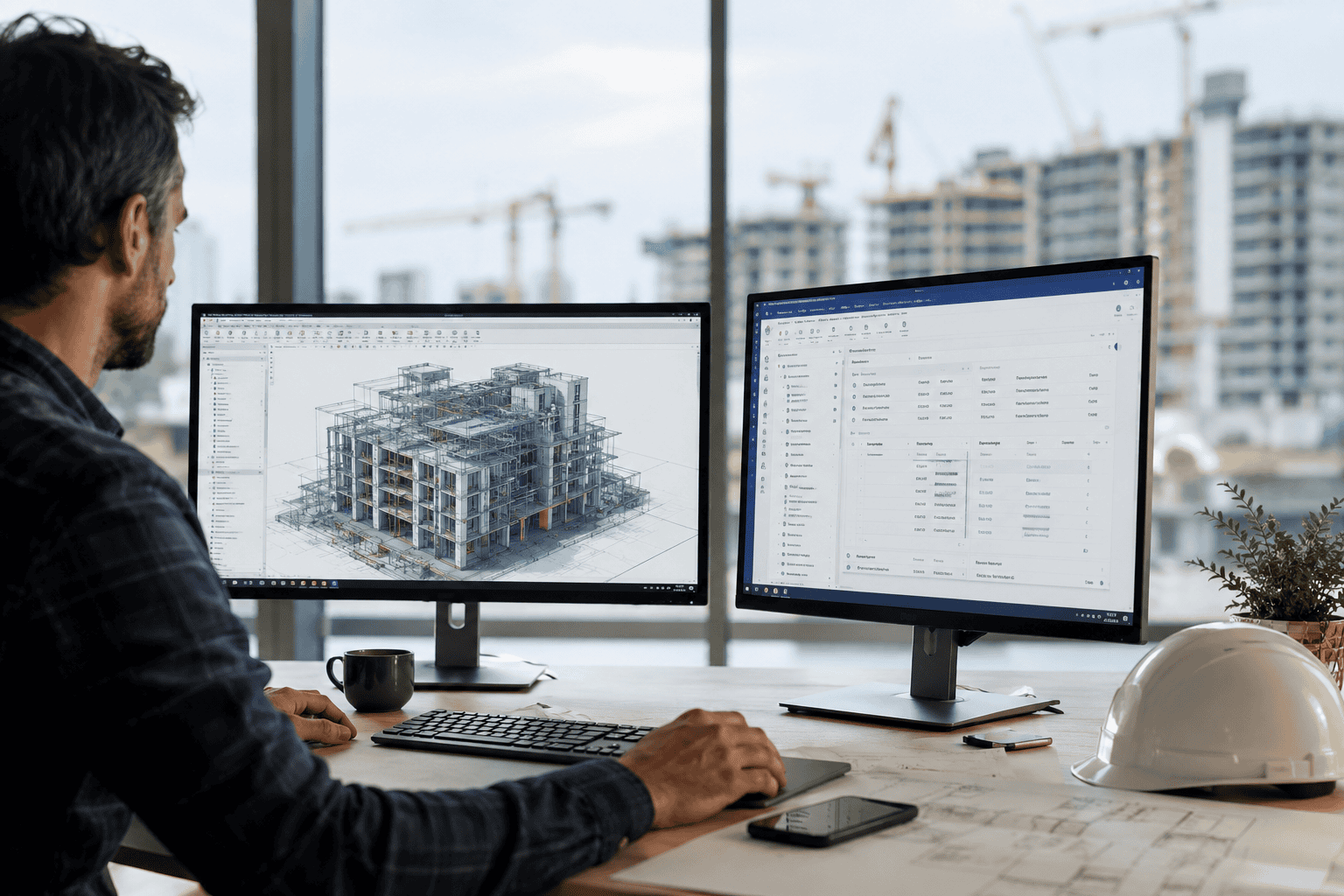
A hospital, a courthouse, a data center or a transport infrastructure cannot be managed like an ordinary construction project. These buildings concentrate critical equipment, sensitive technical data and strict regulatory constraints. The slightest coordination failure can have consequences well beyond a simple budget overrun. This is precisely where BIM becomes an indispensable management tool, provided it relies on a collaborative platform that is truly suited to these challenges.
Why sensitive buildings require specific BIM management
Sensitive building projects differ from a standard construction operation in several ways:
- Many stakeholders: public project owners, lead designers, specialized engineering offices, contractors and coordinators move forward in parallel across very different scopes.
- Highly complex technical equipment: on a hospital, medical gas networks, pressure-controlled ventilation, redundant electrical installations and fire safety equipment must be coordinated with millimeter precision.
- A longer project duration: teams change over time, decisions made months or years earlier must be easy to retrieve and documentation has to remain reliable until the end of construction.
- Confidential information: the detailed plans of a hospital, a prison or a defense facility must not circulate freely, and access control is part of project management.
Without a structured tool, this complexity relies on emails, shared files without versioning and almost non-existent traceability: a risk that sensitive projects cannot afford.
BIM applied to hospitals and public infrastructure
On a healthcare facility, the digital model makes it possible to view all technical networks together and to identify clashes before construction. A medical gas pipe running through a structural beam, a power cable too close to sensitive electronic equipment: BIM coordination detects and fixes them at a much lower cost than rework during the construction phase.
On larger public infrastructure (stations, cultural venues, large sports facilities), BIM makes it easier to manage regulated areas and to coordinate public bodies and private companies. The model becomes the common reference where all technical decisions are documented and tracked, and, kept up to date from acceptance, it helps the building manager organize preventive maintenance and future interventions.

Data security challenges in sensitive BIM projects
Layout plans, details of security systems, locations of critical equipment: in the wrong hands, this information could threaten the occupants or the activities of the building. Stored on a cloud whose servers are located abroad, it may be subject to extraterritorial legislation, which is not acceptable for public procurement and strategic infrastructure. The fundamental requirements are therefore the following:
- Hosting in France: data stays on national territory, under French law.
- Access by profile and work package: rights are managed precisely, with traceability of every action.
- Versioning of models and documents: everyone works on the right version.
- Compliance: the platform meets public procurement requirements and current digital security standards.
What a secure collaborative BIM platform brings
A collaborative BIM platform suited to sensitive buildings does more than store files: it structures all collaborative work in a secure and controlled environment.
- Everything in one place: models, technical documents and exchanges between participants are centralized, with rigorous management of who can access what.
- Tracked approvals and validations: every change is validated, tracked and archived, with clear validation workflows and a complete history of decisions and responsibilities.
- An integrated BIM viewer: authorized participants view models directly from the platform, without downloading large files or using specialized software. The risk of uncontrolled distribution goes down.
Discover
Discover the Kroqi platform.
Start your free trial or request a personalized demo.
Kroqi CSTB, a platform designed for public and sensitive projects
Kroqi is the collaborative BIM platform developed by the CSTB (Scientific and Technical Centre for Building). It was designed in direct connection with the realities of French construction projects, in particular public projects subject to public procurement requirements.
Cloud Solutions SAS, the company behind the Kroqi offers, is HDS certified (Hébergeur de Données de Santé, the French certification for health data hosting) by a body accredited by COFRAC: the hosting of personal health data meets French legal and regulatory requirements, a concrete guarantee for hospital projects. The Kroqi teams also hold DSCP training (Développement et Sécurisation des Compétences Professionnelles) that is valuable for sensitive projects.
Data is hosted in France. The Kroqi secure BIM platform ensures that your digital models and project documents never leave the national territory, a sine qua non for a public project owner. It centralizes models, technical documents and exchanges in a single project space, with an integrated IFC viewer and tools for approval management and document traceability.
For teams working on public procurement or highly critical projects, Kroqi addresses all the challenges: data security, regulatory compliance, multi-party coordination and traceability of decisions.
Best practices for managing a sensitive building BIM project
The success of a sensitive building BIM project depends as much on organization as on tools. Three points are decisive:
- BIM roles defined from the start: who is the BIM coordinator, who validates the models, who has access to which information? The project’s BIM execution plan must answer these questions precisely.
- Structured document spaces: organizing documents and models consistently from the beginning makes information easier to find, reduces version errors and speeds up validations.
- Traceability as a reflex: being able to show who decided what and when is valuable legal and organizational protection in the event of a dispute or a later audit.
These best practices apply to all sensitive projects (a new-build hospital, a public infrastructure under renovation, a strategic facility being extended): the rigor of the BIM organization directly determines the quality of the final result.